Our Blog Details
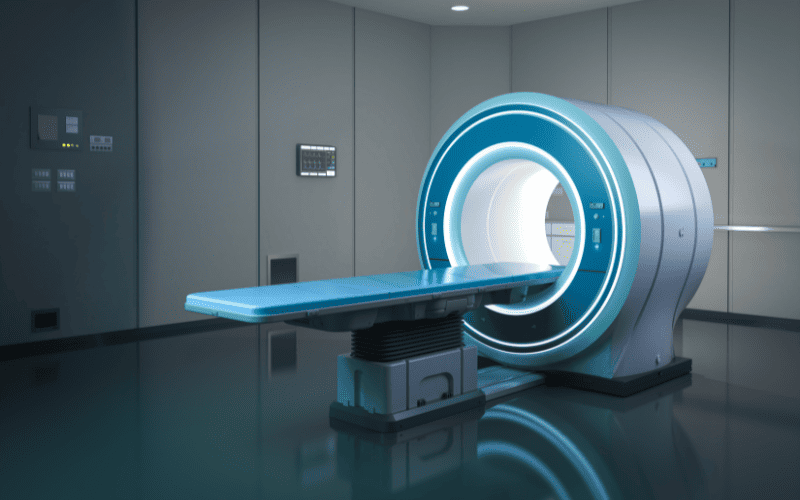
Best Radiologist Near Me for MRI, CT Scan & Ultrasound Services
MRI uses magnetic fields and radio waves to create highly detailed images, especially of soft tissues, nerves, and organs. CT scans use X-rays to produce cross-sectional images that are especially useful for bones, lungs, and for rapid diagnosis in emergencies.
How They Work
- MRI: Uses magnets and radio waves to scan the body. These are ideal for viewing organs, muscles, ligaments, nerves, and the brain. No radiation is involved, making it safer for many patients, but the process tends to be longer (20-60 minutes) and may require the patient to lie inside a tunnel-like machine.
- CT Scan: Utilizes X-rays to create images in minutes (typically 5-10). CT scans are preferred for bones, lung tissue, trauma cases, and when speed matters most. There is a small dose of radiation involved, so CT scans are not usually preferred for pregnant women or children unless necessary.
Key Differences
|
Feature |
MRI |
CT Scan |
|
Technology |
Magnets + Radio Waves |
X-rays |
|
Speed |
20-60 minutes |
5-10 minutes |
|
Image Detail |
Soft tissues, nerves, organs |
Bones, lungs, trauma |
|
Radiation |
None |
Small dose |
|
Cost |
Higher (avg: $2,000) |
Lower (avg: $1,200) |
|
Noise/Comfort |
Noisy, enclosed tunnel |
Quieter, open doughnut |
|
Claustrophobia Risk |
Higher for some people |
Lower |
When to Choose MRI vs CT Scan
MRI is ideal for:
- Detecting ligament or tendon tears
- Diagnosing spinal problems and nerve issues
- Brain and organ imaging
- Soft tissue injuries
- Monitoring tumors and cancer growth
CT scan is ideal for:
- Emergency diagnoses-such as strokes or internal bleeding
- Bone fractures and joint concerns
- Traumatic injuries
- Fast tumor detection and staging
- Diagnosing infections and blood clots
Difference
- MRI produces superior images of soft tissues; CT scans excel at bone and trauma imaging.
- MRI takes longer and can be noisy; CT scans are much faster and quieter.
- MRI does not use ionizing radiation, so it is safer overall, but it's not suitable for patients with certain metal implants.
- CT scans involve a low level of radiation but may be required for urgent conditions and detailed bone imaging.
- Cost: MRIs are typically more expensive than CT scans.
Role of the Radiologist
Consulting the best radiologist near me ensures the correct scan is chosen for the specific problem. Expert radiologists interpret complex scans and help decide whether MRI or CT is medically necessary.
Frequently Asked Questions (FAQ’s)
- Are MRI and CT scan images the same?
Ans: No, MRI provides clearer pictures of soft tissue, nerves, and organs; CT scans are preferred for bones and emergency diagnoses.
- Is an MRI scan safe?
Ans: Generally yes, since no radiation is involved, but patients with metal implants or severe claustrophobia may need alternative scans.
- Who should get an MRI instead of a CT scan?
Ans: People needing soft tissue, nerve, organ, or spinal imaging, especially if avoiding radiation is important, should get an MRI.
- Are these scans risky?
Ans: Both are considered very safe. CT scans involve small doses of radiation, MRI may be unsuitable for certain metal implants.